
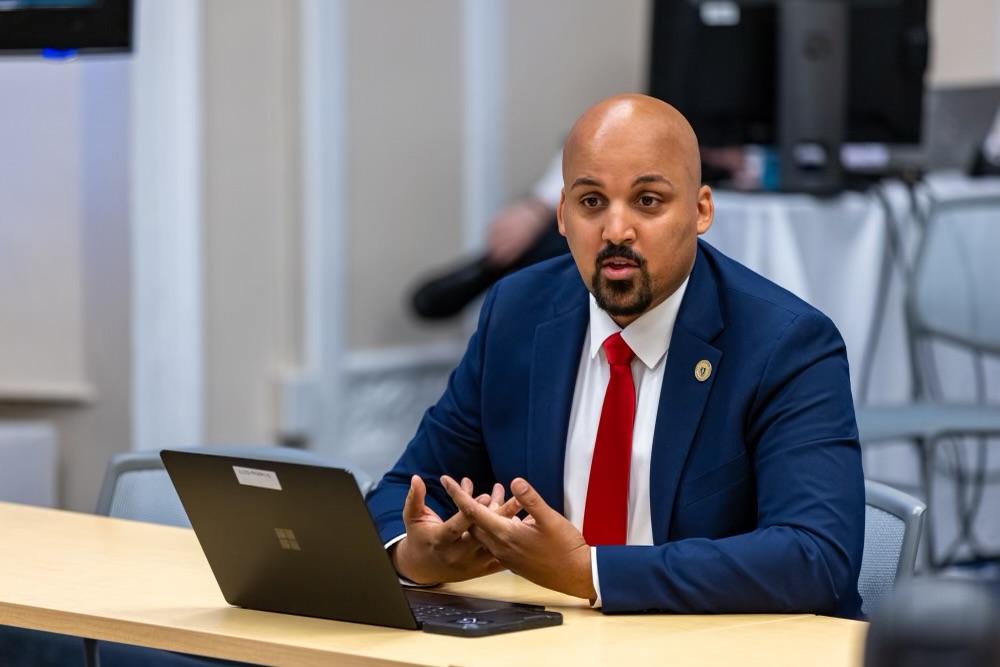
By: State Senator Pavel Payano
9/25
Artificial intelligence is no longer a sci-fi movie. It is here, shaping jobs, schools, and daily life. As Vice Chair of the Senate’s Joint Committee on Advanced Information Technology, the Internet and Cybersecurity (AITIC), I see both the promise and the challenges of this new era.
For gateway cities like Lawrence, Haverhill, and Lowell, the question is urgent: will AI widen existing inequalities, or can it become a tool to build more opportunities? The answer depends on how well we prepare our students today.
The Commonwealth has taken important steps. Governor Maura Healey launched the Massachusetts AI Hub to connect universities, industry, and government. Last year, the Mass Leads Act invested nearly $4 billion to strengthen key sectors—including $100 million dedicated to AI research and development.
Local leaders understand the stakes. Haverhill’s Mayor Melinda Barrett put it best: “We have the opportunity. We’re ready for this.” She’s right and for us to be ready, our schools need to play a major role.
What Schools Need to Do
1. Build AI Literacy Early: Just like math or reading, AI should become part of the curriculum. Students need to understand not only how AI works, but how it affects jobs and society.
2. Strengthen Pathways to College and Careers: Partnerships between high schools, community colleges, and universities must ensure students leave with credentials that connect directly to jobs in tech, healthcare, and manufacturing.
3. Ensure Equity of Access: Gateway city students must have the same access to broadband, modern devices, and classroom technology as students in wealthier communities.
4. Support Teachers: Professional development, scholarships, and certification programs are needed so educators feel confident teaching and using AI responsibly.
5. Protect Student Privacy: AI tools can help schools manage tutoring or translation, but strict safeguards must be in place to protect families and communities.
Our gateway cities are diverse, resilient, and ambitious. But too often they’ve been left behind in past economic shifts. We cannot repeat that mistake.
If we make AI education a priority, we won’t just prepare students for jobs—we’ll prepare them to lead innovation. When local students are AI-ready, our cities become magnets for investment, and that growth can stay rooted in our communities.
At the State House, I am working with my AITIC colleagues on legislation to set AI education standards, fund school-based AI programs in gateway cities, and protect the privacy of student data. These measures ensure that statewide investments reach the classrooms where they are needed most.
AI will reshape our economy whether we are ready or not. The real question is whether our students, especially those in gateway cities, will be prepared to thrive.
I believe they can. But it requires urgency, focus, and investment in our schools. The cities of Haverhill, Lawrence, and Methuen are uniquely set to take advantage of the opportunities that are coming our way. We just need to do the job to prepare for it.
Pavel Payano is a Massachusetts State Senator, a former Lawrence City Councilor and School Committeeman. You can email him at sharoline.galva@masenate.gov◊